
AI training in talent development isn't just a trend—it's becoming essential. Did you know 74% of companies think AI will change how they operate in the next five years? We're at the start of a new era in managing teams, and it's key to grasp how AI fits into talent development. From boosting employee skills to making hiring smoother, AI is changing how businesses grow and support their people. In this article, we'll look at the steps to set up AI training, see how it's used in real life, and check out future trends that could shake up the industry. If you're curious about using AI in your talent development plans, let's get started!
Summary: Dieser Artikel beschreibt die Rolle von Künstlicher Intelligenz (KI) in der Talententwicklung und bietet einen Leitfaden zur Implementierung von KI-gestütztem Training. Er untersucht praktische Anwendungen, zukünftige Trends und strategische Überlegungen im Bereich KI-Training.
The Role of AI in Talent Development
AI's Impact on Talent Development Strategies
AI is transforming talent management by enhancing efficiency, engagement, and satisfaction through personalized development and data-driven decisions. By compiling comprehensive employee profiles—incorporating performance reviews, skill assessments, and achievements—AI can recommend development programs that align with individual career aspirations and organizational goals. This ensures that employees receive training that truly meets their needs.
Moreover, AI plays a pivotal role in identifying and addressing skill gaps. By comparing employee profiles with job requirements, it facilitates targeted upskilling, reskilling, or hiring, thereby optimizing training investments. AI's predictive analytics can also identify potential turnover risks early, enabling HR to implement retention strategies and enhance the work environment. Additionally, AI insights assist HR in planning for future workforce needs by forecasting skill gaps and proposing solutions. Through these capabilities, AI removes the guesswork from talent decisions, leading to fairer hiring, promotions, and workforce planning.

AI-Driven Personalized Learning Experiences
AI revolutionizes learning by analyzing learner performance, skills, progress, and preferences. It customizes training content and pace to maintain engagement and enhance retention. AI-powered learning systems dynamically adjust to individual learning styles and speeds, transforming training into a personalized journey. For instance, AI provides real-time feedback and intelligent coaching to enhance skill development and retention during training sessions.
AI-driven adaptive learning platforms continuously monitor learner progress, adjusting difficulty, format, and pace to sustain motivation and focus on areas needing improvement. Tools like AI-powered virtual and augmented reality offer immersive training environments for practicing soft skills and complex tasks, making learning both engaging and practical. These technologies not only personalize learning but also increase its accessibility and effectiveness, reshaping how individuals acquire new skills and knowledge.

For more insights, explore these resources:
Implementing AI Training: A Step-by-Step Guide
Evaluating Organizational AI Maturity
Before diving into AI training, it's crucial to assess where your organization currently stands with AI. Consider how AI aligns with your business goals and identify areas where it can make a significant impact. Conduct a gap analysis to pinpoint missing roles, skills, and resources related to AI. This will provide a clear picture of your current AI adoption and integration level.
-
Monitor AI Maturity: Measure progress with specific KPIs and adjust plans as needed.

-
Establish Governance: Set up a governance structure that supports responsible AI use, focusing on ethics and compliance.
For instance, a company might begin by evaluating its AI strengths and weaknesses, then establish KPIs to track progress while fostering a strong AI culture.
Crafting a Strategic AI Skills Framework
Once you understand your AI maturity level, it's time to establish a strategic skills framework. Collaborate with teams from various departments to gain diverse perspectives and expertise on AI projects. Define clear goals and success metrics (KPIs) that align with your business priorities to guide skill development and training.
-
Create AI Training Programs: Cover essentials like data prep, model training, validation, and ethical AI.

-
Use Modular Training Methods: Ensure smoother and more consistent learning.
Incorporate version control tools like DVC or MLflow to teach best practices in handling data, models, and experiments. A company might design a training curriculum with hands-on labs in data preprocessing, model tuning, and ethical AI, supported by version control software training.
Establishing AI-Driven Learning Programs
With a skills framework in place, focus on AI-driven learning programs. Start small with pilot projects that have clear use cases and measurable outcomes. Refine AI solutions by improving models, addressing issues, scaling infrastructure, and ensuring ethical standards.
- Use Configuration Files: Speed up testing and pinpoint errors.
- Set Up Feedback Loops: Adjust programs based on learners' and business needs.
Emphasize the importance of human data labeling and domain expertise to enhance model accuracy. A company might initiate an AI project with a small team to learn and grow, then expand training and infrastructure based on feedback.
Evaluating AI Training Success
To evaluate the effectiveness of your AI training, set clear KPIs that align with your business goals. Monitor training results and AI project performance to identify areas for improvement and expand successful initiatives.
- Utilize Version Control and Experiment Tracking: Ensure reproducibility and the ability to roll back if needed.
- Regularly Update Strategy: Keep AI strategy, governance, and training programs aligned with business and tech changes.
A company might track KPIs on AI use and model accuracy, use experiment logs for troubleshooting, and refresh training content and policies annually.
Following these steps can help organizations roll out AI training programs that not only enhance skills but also align with business goals. Continually monitor and refine AI systems, focusing on data strategy, governance, and ethics to maintain AI performance and achieve lasting success.
For more detailed guidelines on AI implementation, explore resources like the AI Implementation Guide by ITS America, which offers insights into readiness, governance, and ethical AI culture. Platforms like AIMultiple also provide valuable information on AI training and project management best practices.
Practical Applications and Use Cases of AI in Talent Development
AI in Recruitment and Onboarding Processes
AI is revolutionizing recruitment and onboarding by making these processes faster and less biased. Tools such as resume screening and predictive analytics are instrumental in identifying and attracting top talent efficiently. These tools match candidates to jobs based on skills and experience, reducing unconscious bias and saving time.
Consider Unilever, which employs AI for candidate assessments through gamified screening and video interviews analyzed by machine learning. This approach has reduced their hiring time by 75% and increased diversity.
AI also enhances onboarding with virtual assistants and chatbots. These tools guide new hires through the onboarding process, answering questions and providing resources as needed. This personalized support not only improves the onboarding experience but also helps new employees integrate smoothly.
Predictive Analytics in AI Training for Workforce Planning
AI-powered predictive analytics are transforming workforce planning. They enable companies to forecast workforce needs and manage talent proactively. By analyzing employee performance, skills, and turnover risk, organizations can anticipate future talent requirements and make informed decisions.
For instance, IBM utilizes AI to predict employee attrition with 95% accuracy, providing career advice that has saved over $300 million in retention costs.

Predictive analytics also refine workforce strategy by measuring training effectiveness and enhancing hiring and development processes. This data-driven approach ensures training programs align with strategic goals, making workforce development both efficient and effective.
Automation in AI Training for Administrative Tasks
AI automates routine HR tasks such as resume screening, interview scheduling, and onboarding workflows, allowing HR teams to focus on strategic talent development. AI platforms integrate with learning management systems to provide personalized learning paths and automate content recommendations based on employee data. This automation liberates HR professionals from mundane tasks and enhances efficiency.
For example, HCLTech replaced manual mentoring with an AI platform that pairs mentors and mentees using performance data and skills. This streamlines program management and boosts engagement, illustrating how AI can transform traditional HR processes.
Beyond automating administrative tasks, AI fosters dynamic learning environments. Platforms like Coursera and LinkedIn Learning utilize AI to suggest personalized learning paths based on an employee's skills and goals. This accelerates skill development and aligns employee growth with company objectives, promoting a culture of continuous learning and innovation.
By integrating AI into talent development strategies, companies can enhance recruitment, streamline operations, and cultivate a culture of ongoing learning, ultimately driving success.
Future Trends and Strategic Considerations in AI Training
AI-Driven Mentorship and Coaching in AI Training
AI-powered personal coaching is revolutionizing workplace learning by providing virtual mentors available around the clock. These mentors adapt to individual learning styles, deliver real-time feedback, and tailor explanations to each learner's understanding. This technology is increasingly utilized in onboarding, skills training, compliance, and on-the-spot problem solving. It enables employees to acquire new skills swiftly and integrate learning into their schedules seamlessly.
AI coaching systems continuously improve by learning from individual interactions. They identify areas where learners struggle and adjust teaching methods accordingly, resulting in faster, smarter, and more personalized training. The drive for AI in training stems from the urgent need to rapidly upskill and reskill as job roles and technologies evolve.
Learn more about AI-powered personal coaching
Immersive VR Learning and AI in Training
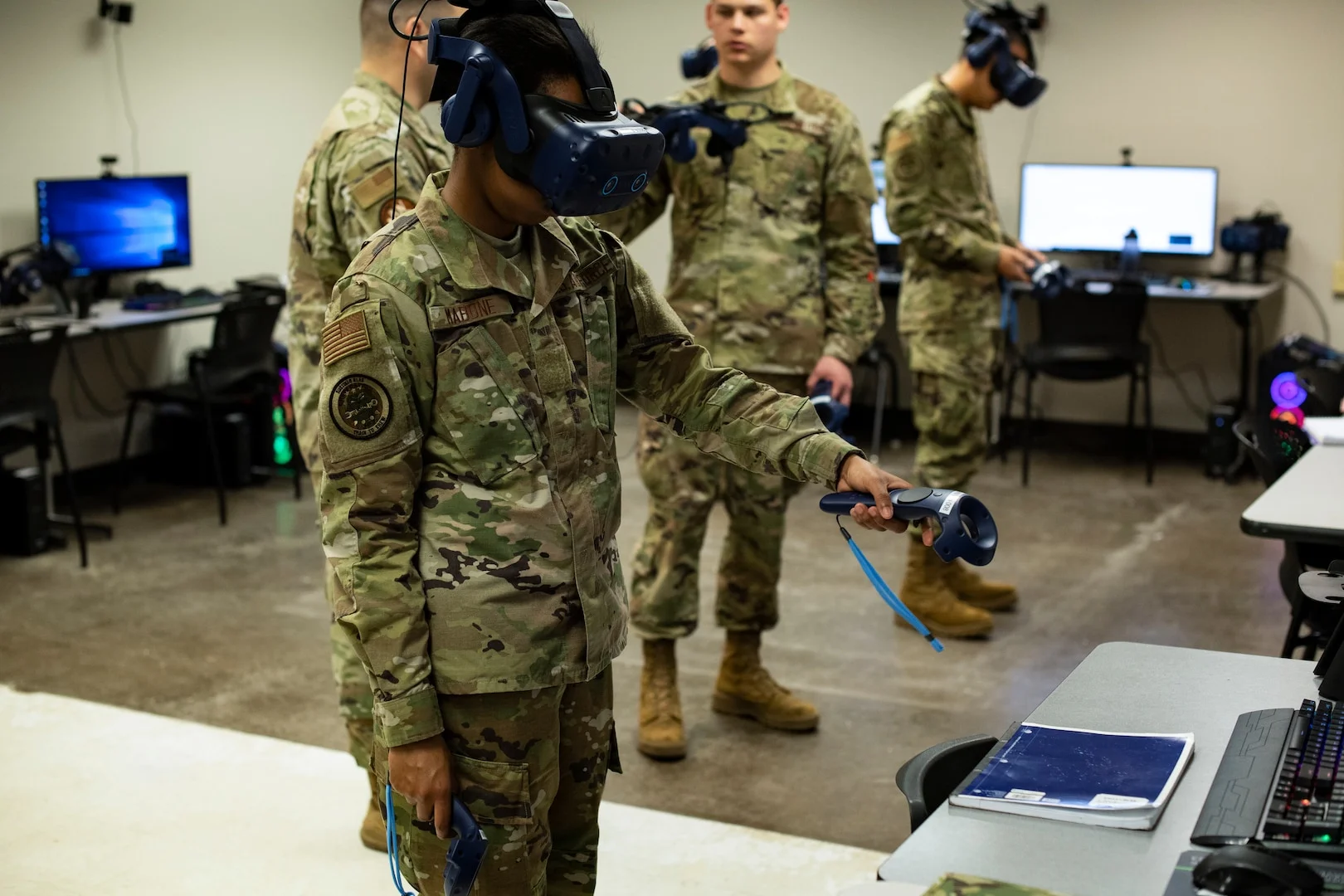
The integration of Virtual Reality (VR) with AI is emerging as an innovative method to engage learners through experiential and gamified training environments. AI-driven systems customize VR scenarios to meet individual learning needs, providing realistic practice opportunities that enhance skill retention and application.
The combination of VR and AI creates highly personalized learning paths, making training more enjoyable and effective by simulating real-world challenges in a safe setting. Learning and development leaders should explore these immersive technologies to enrich training programs and increase employee engagement.

By 2025, workforce training accounted for 36% of total EdTech funding, fueled by upskilling initiatives and scalable career-focused solutions, highlighting the growing investment in AI training programs. Notably, 79% of employees who received over five hours of AI training became regular AI users, compared to 67% with less training, underscoring the importance of comprehensive AI training for adoption.
Best practices in AI training involve co-developing programs with employers and partners to ensure job readiness. These programs utilize AI-driven platforms that adapt to each learner's progress and offer interactive comprehension tests. Expanding Registered Apprenticeships and aligning curricula with AI infrastructure needs are strategic approaches to building a skilled AI workforce.
Explore immersive VR learning environments
Discover the investment in AI-related training programs
Understand the impact of comprehensive AI training
FAQ Section
How Can AI Training Personalize Learning for Employees?
AI has the potential to revolutionize personal learning by tailoring content specifically to each employee's role, skill level, and needs. This personalized approach enhances skill development and keeps employees more engaged. AI platforms dynamically adjust training materials based on employees' activities and the risks they might encounter, ensuring that learning remains relevant and focused.
Moreover, AI training can educate employees about specific AI risks, such as hallucinations, enabling them to handle AI tools more effectively. For instance, AI-powered learning management systems assess an employee's existing knowledge, recommend courses suited to their job, and adjust the difficulty level as they progress, thereby making learning more effective.

Benefits of AI Training in the Recruitment Process
AI streamlines the recruitment process by automating candidate screening. It analyzes resumes and matches qualifications to job requirements, reducing time and bias. AI tools can identify skill gaps by comparing candidates' profiles with job needs. This data-driven approach enhances hiring decisions by predicting a candidate's potential fit and performance.
For example, companies utilize AI recruitment platforms to efficiently sift through numerous applications, select top candidates based on skills, and even predict cultural fit by analyzing past work and behavior. Reviews on platforms like G2 highlight that AI recruitment tools accelerate screening, reduce bias, and increase accuracy, thereby boosting hiring speed and quality.
AI Training for Identifying and Addressing Skill Gaps
AI plays a crucial role in identifying and addressing skill gaps within organizations. By analyzing employee performance data and learning progress, AI can pinpoint areas needing improvement for both individuals and the company. AI-powered tools recommend personalized training to efficiently bridge these gaps, aiding employees in acquiring the necessary skills.
By continuously monitoring skills and performance, AI supports ongoing upskilling and reskilling to align with evolving business and technological demands. For instance, some companies use AI to track employee skills against industry trends and automatically suggest courses and certifications to close gaps. This approach fosters continuous learning and targeted upskilling, resulting in a more capable workforce.

Effective AI training involves steps such as preparing quality data, selecting appropriate models, and continuously refining them to ensure accurate, personalized advice. For more insights into AI training methods, Oracle provides a detailed overview of the process.